
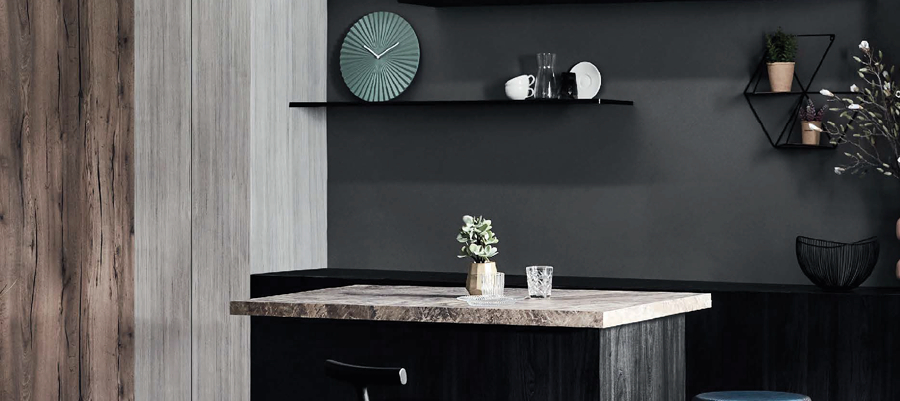
Be it residential or commercial spaces, wooden surfaces are known to bring warmth, character, and a timeless appeal. That said, its high pricing and maintenance requirements often prompt designers and homeowners to explore alternative materials that can offer the appeal of wood while offering durability, affordability, and design flexibility, which brings us to wood veneer and laminate sheers that allow designers to create the warmth of solid wood – with additional performance properties – without stretching their budget. In this article, we’ll explore these popular solid wood alternatives and explain where each works best. Let’s dive in.
What are Wood Veneer Sheets?
Wood veneer sheets are thin slices of natural wood that are carefully cut from timber logs. These slices are extremely thin, typically ranging from around 0.5 mm to 3 mm in thickness. Because they are made from real wood, veneer sheets preserve the natural grain patterns, textures, and colour variations that make wood so visually appealing.
The process of producing sheet veneer wood involves slicing or peeling logs into thin layers. These layers are then bonded onto a substrate such as plywood, MDF, or particle board. The result is a decorative surface that retains the look of solid wood while using significantly less raw timber.
Common Veneer Types
Many wood species can be used to produce veneer sheets, each offering unique visual characteristics. Some of the most popular options include:
- Red oak veneer sheets: Known for its strong grain patterns and warm tones.
- White oak veneer sheets: Popular in contemporary interiors because of their lighter colour and subtle texture.
- Walnut veneer sheets: Recognised for its rich brown tones and elegant appearance.
- Teak veneer sheets: Often used in classic and luxury interiors.
Because veneer sheets come from real wood, every sheet has its own distinctive grain pattern, making each finished surface slightly unique.
Key Features of Wood Veneer Sheets
Wood veneer sheets are widely appreciated for several reasons:
- Authentic wood grain: Since veneer sheets come from real timber, they display genuine wood patterns and textures.
- Natural variation: No two veneer sheets are identical, which adds character to furniture and wall panels.
- Premium interior finish: Veneers are often associated with sophisticated and high-end design aesthetics.
Sustainability is also becoming an important factor in interior materials. Many veneer collections today are sourced responsibly. For instance, Greenlam offers FSC-certified wood veneer sheets, ensuring that the wood used in the manufacturing process comes from responsibly managed forests.
Veneered Laminates
Among the many backing options for wood veneer sheets, many manufacturers offer laminates. Veneered laminates are essentially wood veneer sheets with a laminate backing, combining the visual beauty of natural wood with the structural stability of laminate technology.
Veneered laminate sheets or veneer-finish laminates help improve durability and ease of installation while maintaining the natural wood aesthetic.
Applications of Wood Veneer Sheets
Because of their natural appearance, veneer sheets are widely used in a variety of interior applications, including:
- Luxury furniture surfaces
- Decorative wall panels
- Cabinet shutters
- Doors and partitions
- Office interiors and hospitality spaces
Designers often choose veneer sheets when they want the authentic visual appeal of real wood while maintaining design flexibility. This is why veneer surfaces are frequently seen in high-end residential and commercial interiors.
Read Also: Veneer Laminates & Middle Eastern Architecture: A Modern Fusion
What are Wood-Inspired Laminates?
While veneer sheets use real wood, wood-inspired laminates are engineered decorative surfaces designed to replicate the look of wood through advanced printing technology.
These laminates feature printed patterns that mimic the grains and colours of natural wood species. The design layer is then sealed with protective layers that enhance durability and make the surface resistant to everyday wear.
Because of modern manufacturing techniques, wood-inspired laminates can convincingly recreate the appearance of many popular wood species.
Advantages of Wood-Inspired Laminates
Wood-inspired laminates offer several practical benefits that make them popular in both residential and commercial interiors:
- Affordable alternative to natural veneer surfaces
- Consistent design patterns across large surfaces
- Easy to clean and maintain
- Resistance to scratches and stains
Another advantage is the wide range of design options available. Greenlam Laminates offers a large selection of laminates that replicate the appearance of numerous wood species, including:
- American walnut
- Mahogany
- Natural pine
- Wenge
- Oak
- Teak
These wood-inspired laminates are available in different finish options such as Satin, Super Gloss, and other decorative textures that allow designers to match various interior styles.
Wood-inspired laminates are therefore widely used in kitchens, wardrobes, office furniture, and interior panels where both aesthetics and practicality are important.
What are Wood-Texture Laminates?
Wood-texture laminates take the idea of wood-inspired laminates a step further. Instead of only replicating the visual pattern of wood, these laminates also recreate the tactile texture of wood grain.
Through specialised embossing techniques, the surface of the laminate is designed to mimic the natural ridges and grooves found in real wood. This gives the laminate a more realistic feel and enhances the overall depth of the design.
Key Characteristics of Wood-Texture Laminates
Wood-texture laminates offer several distinctive features:
- Realistic wood feel: The embossed surface replicates the tactile sensation of natural wood grain.
- Enhanced depth: Textured finishes add visual dimension and character to interior surfaces.
- Versatility: Suitable for contemporary as well as traditional interior themes.
Greenlam offers a wide variety of wood-like textures that allow designers to experiment with different design styles. Some popular texture options include:
- Aria
- Burnished Wood
- Chased Wood
- Country Wood
- Hand-scraped finishes
Greenlam also offers specialty surface texture collections such as Veracious Bark Laminates, which introduce highly distinctive textures inspired by natural tree bark.
Because of their unique tactile qualities, wood-texture laminates are frequently used in feature walls, cabinetry, and statement furniture pieces.
Read Also: Laminates vs Natural Materials: The Real Winner in Style, Durability & Cost
Wood Veneer Sheets vs Wood-Inspired Laminates vs Wood-Texture Laminates
Each of these materials offers its own unique characteristics. Understanding their differences can help designers and homeowners select the right option for their projects.
|
Feature |
Wood Veneer Sheets |
Wood-Inspired Laminates |
Wood-Texture Laminates |
|
Material |
Natural wood |
Printed laminate |
Embossed laminate |
|
Appearance |
Authentic wood grain |
Wood-like design |
Wood-like design with texture |
|
Surface Feel |
Natural wood |
Smooth surface |
Textured grain |
|
Cost |
Premium |
Budget-friendly |
Mid-range |
Rather than competing with one another, these materials serve different design requirements. Some projects may prioritise natural authenticity, while others may require durability, consistency, or textured finishes.
How to Choose the Right Material for Your Interiors
Choosing between wood veneer sheets, wood-inspired laminates, and wood-texture laminates depends on several factors.
- Budget: Different materials fall into different price ranges. Veneer surfaces often occupy the premium category, while laminates offer more economical solutions for large spaces.
- Durability Requirements: Certain areas, such as kitchens or high-traffic commercial environments, require surfaces that are resistant to scratches and stains.
- Interior Style: The design theme of the space also plays an important role. Some interiors benefit from natural wood grains, while others favour uniform finishes or textured surfaces.
- Maintenance Expectations: Natural veneer surfaces may require periodic polishing or care, whereas laminate surfaces are generally easier to maintain.
Ultimately, selecting the right option depends on the balance between aesthetics, functionality, and the specific needs of the interior space.
Maintenance and Care
Proper care helps maintain the beauty and longevity of wood-based surfaces.
- Cleaning Veneer Surfaces
Veneer surfaces should be cleaned gently using a soft cloth. Excess moisture should be avoided to preserve the finish. Using protective coatings or sealants can help maintain the appearance of veneer furniture and wall panels over time.
- Maintaining Laminate Surfaces
Laminate surfaces are generally low-maintenance. Regular dusting and occasional wiping with a damp cloth and mild cleaning solution is usually sufficient to keep them looking fresh.
In the end, wood-inspired surfaces continue to play a central role in interior design because they bring warmth, texture, and visual interest to spaces. Wood veneer sheets, wood-inspired laminates, and wood-texture laminates each provide unique ways to achieve the aesthetic appeal of wood. Veneer sheets offer the authenticity of real timber, while laminates provide design versatility and durability in different forms.
Rather than viewing these materials as alternatives to one another, it is more helpful to consider them as complementary solutions. The right choice depends on the design vision, functional requirements, and overall character of the interior space.
About Greenlam Laminates
Greenlam Laminates is recognised globally as one of the leading manufacturers of decorative laminates. The company has built a strong reputation for delivering high-quality surface solutions that combine design innovation with reliable performance.
With a large production capacity and a focus on advanced manufacturing technologies, Greenlam offers a wide range of decorative surfaces including laminates, wood veneer sheets, and speciality textures. Architects, interior designers, and homeowners across the world rely on these products to bring distinctive character and elegance to interior spaces.
The brand also maintains a strong international presence, including a growing footprint across the Middle East, including the United Arab Emirates, Saudi Arabia, Qatar, Oman, Kuwait, and Bahrain, supported by an extensive distribution network.
Explore Greenlam’s range of decorative laminates and veneer surfaces online to discover materials that bring your interior ideas to life. For enquiries, call +971-50-3504262, email us at info.uae@greenlam.com, or visit the contact form.